facebook instagram
  • Home
  • About Janielle
  • Music
    • Music Makers for Peace
    • Teaching Portfolio
  • Photography
  • Connect

Wayfarer By Faith


Jerusalem is a captivating city of ancient stories and peoples. Boundless in historical, sociocultural, and religious diversity revealed in the city's numerous architectural wonders, archaeological artifacts, and sacred sites, it is the inquisitive traveler's portal into the mysterious world of the Ancient Near East. It is difficult to fathom the magnitude of its historical breadth once you see with your own eyes such a tiny piece of the Middle East that has for inexplicable (and biblical) reasons endured countless upheavals, military conquests, resurgences and the intermittent (or should we say transient) windows of peace. There’s just so much to soak in; it gets overwhelming! 

So fellow wayfarer, are you on a quest to wander Jerusalem, capture unforgettable vistas, and experience all the various elements that make this city the wonder that it is? Here's a start. This article features recommendations for the best Old City rooftop view, an underground exploration beneath what's left of the visible Western Wall, a heart-wrenching genocide memorial experience at Mount Herzl, the eclectic Mahane Yehuda Jerusalem market, and an intriguing museum walk. I was able to do all that (and heaps more) without paying an exorbitant amount of money to tag along a tour group. While in Jerusalem, I embarked on days of both spontaneity and planned agenda all on my own, as I'm not a fan of paying for official tours. (The only ones I did were locally run, such as The Kotel organization and a walking tour of the Jewish and Christian Quarter in the Old City, which I didn't pay a penny - or rather, shekel for - since it's offered free.) You can certainly do the same! Inevitably, you find that, along the way some incredible people will cross your paths too.

A gorgeous day in the Old City overlooking both the famed and contentious Dome of the Rock and the Western Wall. Possibly one of the most exceptional vantage points in the world - simply because you are looking on at a place borne through the echelons of history! Photograph: Yan Kamintzky.

While I spent a total of 50 days backpacking and volunteering in Israel (including one week in Jordan), I made sure I returned to Jerusalem twice during that time so that I'd have ample opportunity to explore the things I wanted to do. All in all, I managed to cover just about everything I wanted to see in 12 days or so. Of course, I’d gladly spend a year in Jerusalem studying Hebrew and volunteering or the like – it would be the only ideal way to really immerse oneself in everything this incredible place has to offer. (I'm plotting my return, needless to say!) 

“The view of Jerusalem is the history of the world; it is more, it is the history of earth and of heaven.” Benjamin Disraeli

A typical day in the busy streets of New Jerusalem. Photograph: Janielle Beh.

It’s refreshingly liberating to get around and stumble upon the various nooks and crannies of Jerusalem without a scheduled tour, which can really restrict your freedom to explore. If you’re adventurous, and you don’t mind walking (a lot); if you like getting on local buses and sheruts (mini-van taxis); if you love trying different foods and chatting with new people (thankfully almost everybody you meet on the streets will be able to speak pretty fluent English though the first two main languages are Hebrew and Arabic), you’re totally up for the challenge to impress some solo footprints around Jerusalem! I assure you that it will be a learning experience of a lifetime that encompasses culture, history, tradition, religion, and some exhilarating photography opportunities! 

1. Jerusalem Old City at Sunset

A mesmerizing view of the Old City at dusk from one of the best rooftops in Jerusalem! Photograph: Yan Kamintzky.

An Israeli friend of mine who works with Go Eco Israel took me to the best place ever within the Old City to see the marvelous Middle Eastern sunset overlooking the splendour of Jerusalem’s ancient rooftops, churches, and mosques. It was an inconspicuous place known as the Austrian Hospice located in the Arab or Muslim Quarter, a few paces from the famed Via Dolorosa route on the corner of Al-Wad Street. The quickest way to get there is via the Damascus Gate, which takes you into the Arab Quarter – probably the busiest and most chaotic part of the Old City. For a respite from the hustle and bustle, it's nice to escape into the quaint castle-like guesthouse. (Note that you need to ring the bell at the mahogany doors of the entrance before you speak into the intercom and request the reception to open it for you anytime between 7am to 11pm). 
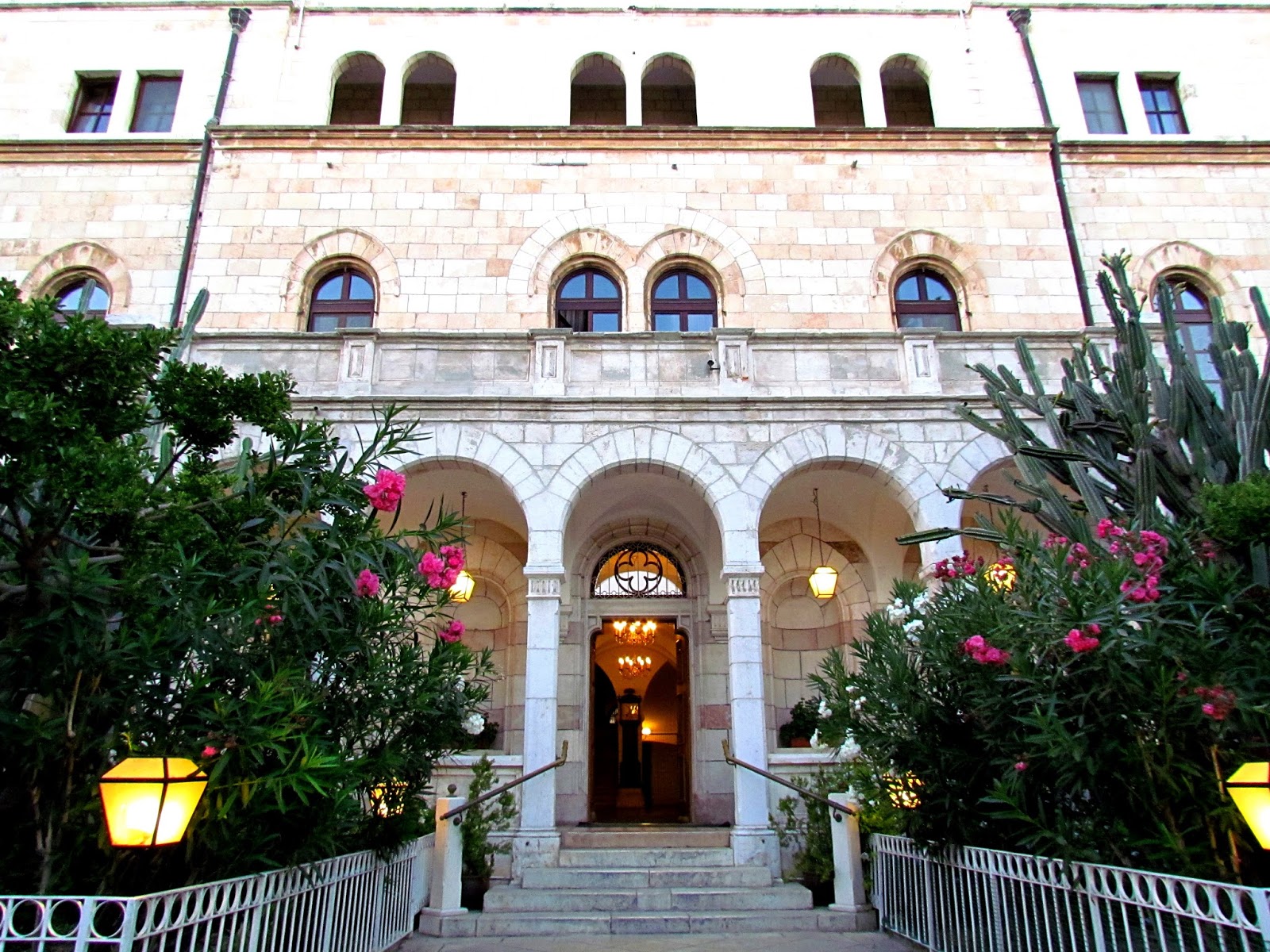
The elegant entrance of the Austrian Hospice. Photograph: Janielle Beh.
Established in 1863 by an Austrian-Hungarian pilgrim, the Austrian Hospice later served as the Austrian consulate in Palestine. Now it is a beautifully serene guesthouse that features a well-kept garden, a lovely café – try their Austrian strudel and hot chocolate! – and immaculate  hallways. It is marked in the Lonely Planet guidebook as a ‘top choice’ accommodation in the Old City. While I didn’t have the chance to stay there due to the unrest that was also going on at the time in the Arab Quarter (it was during the 50-day summer war of 2014 that I was backpacking and volunteering in Israel!), I was so glad that my friend took me to the rooftop of the hospice where I was mind-blown by the spectacular panorama it offered of the Old City. 

A poignant view on the rooftop of the Austrian Hospice where a cross stands with the Dome of the Rock in the background. Photograph: Janielle Beh.

I went there three times to photograph the city scape, once in the afternoon, and two other times in the quiet tranquility of dusk just before the mosques began to sound their evening prayers. If you are exploring the Old City, make sure you stay long enough till sunset to see this! However, if you are a solo traveler and worried about safety, I do suggest that you either stay at the hospice for the night, or go with a couple of reliable friends or fellow travelers. In the evenings, it’s always good to be cautious of your surroundings and people who attempt to strike a conversation with you when you are wandering the Arab Quarter and the Old City in general. Other than that, you’ll have a smashing time and for the most part feel very safe, as there are helpful Israeli soldiers posted in every corner to maintain the security.


2. The Western Wall Tunnels
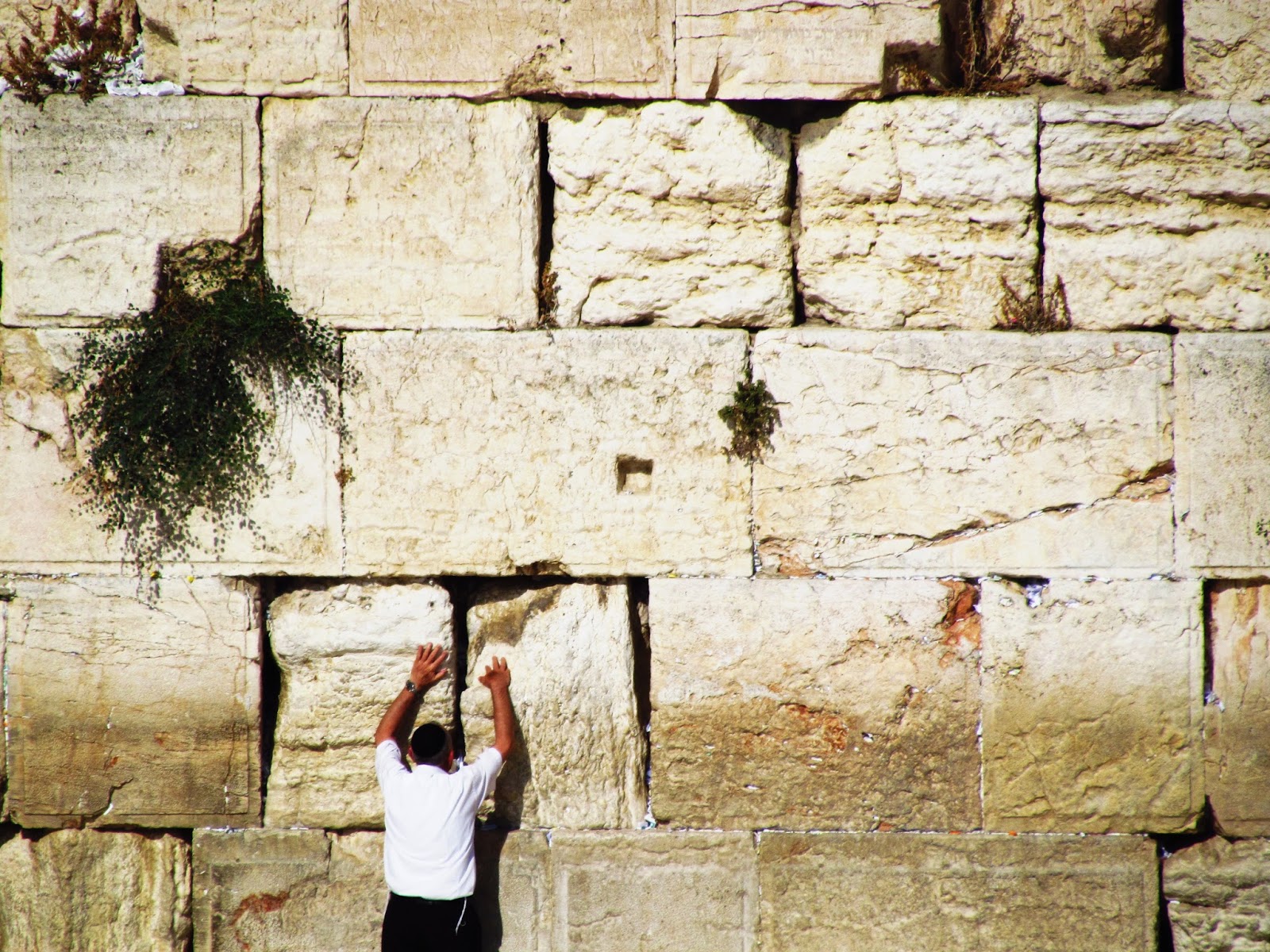
 
A Jewish man prays at the Western Wall. Photograph: Janielle Beh.

Even if you’ve never been to Israel, chances are you would have heard something of the Western Wall (Ha-Kotel, in Hebrew) or the Wailing Wall of Jerusalem’s Old City. It is considered one of the holiest places on earth for the Jews as it is part of the Second Temple. However, after the destruction of the Temple by the Romans in 70 AD, the Jewish people were once again exiled from their land. The Western Wall is what remains of the outer wall of the temple. The reason why it is thought to be so sacred is that rabbis of old have suggested that the divine presence of God had never left the wall, thus it has become a site of pilgrimage for all religious Jews and many around the world who are just curious to explore the indescribable aura of this ancient place. The wall now functions as a unique sort of ‘open-air’ synagogue where you will find people praying, crying, and lamenting at the wall (that’s why it was dubbed the Wailing Wall). Many also jot down a quick prayer and stick their prayer-note into the huge cracks between the stones. Visitors just need to take note that men and women are separated into two sections across the wall, and that women need to dress modestly with a head-scarf.

The Western Wall Tunnels is what’s beneath the wall, a 488-meter long passage that runs the northern part of the wall. The only way to access this underground area of the Old City is to take a fascinating and insightful tour run by The Kotel (it cost me about $12 or less in Israeli shekels). It’s absolutely remarkable to see how the original walls were made of foundation stones that are so gigantic that some of them weigh several hundred tons and are the size of a bus! While it is cold and musty underground, it is absolutely worth the exploration as the Western Wall Heritage Foundation has helped to establish a proper route through the past and continuing excavations which unveil the wonder of ancient Jerusalem reaching back over 2,000 years despite years of ensuing battles and reconstructions. As you walk through these tunnels, you can only imagine Jerusalem's original grandeur, now half buried beneath the modern pavement. It’s an awesome and hair-raising feeling.


Exploring the dimly lit Western Wall tunnels and massive foundation stones of the original wall. Photograph: Janielle Beh.

3. Yad Vashem Holocaust Memorial

The interesting architectural design of the prism-like Yad Vashem Memorial building at Mount Herzl, the Mount of Remembrance. Photograph: Janielle Beh.

It was my second last day in Jerusalem after spending 48 days traveling around Israel, volunteering in a Galilean Druze village up north, and also spending a week in Jordan. I decided to spend the day reflecting and journaling – but I first wanted to visit the well-known Yad Vashem Holocaust Memorial at Mount Herzl. I didn’t regret taking half a day walking around the complex and exploring the grounds, which cover over 18 hectares of the Mount of Remembrance. It costs absolutely nothing to visit the museum and memorial grounds. Without a doubt, I learned and saw a great deal at Yad Vashem that both convicted and overwhelmed me. 

The History Museum, an impressive walk-through structure designed by the architect Moshe Safdie, takes about an hour to two hours of exploring, reading, and contemplating the devastating yet inspiring stories that cover comprehensive historical details, photographs and artifacts salvaged from the Holocaust events. The end of the museum features the circular Hall of Names, where the three million or so ‘Pages of Testimony’ filled out by family members of Holocaust victims along with profile photographs, are framed on the walls. 

A humbling moment at the Hall of Names. Photograph: Janielle Beh.

Another part of Yad Vashem is the Children’s Memorial, where the 1.5 million Jewish children whose lives were lost in the Holocaust are honored by a flame that is reflected in hundreds of mirrors. As you walk through this dark and ethereal space, you hear the names of the children announced by hidden speakers. It is a surreal experience that leaves you with a heavy heart.  

When you exit the museum complex and visitor compound, you can take a pleasant stroll along the mountain where a marked path will lead you through park-like surroundings where you will notice trees that are dedicated to those who risked their lives to help the Jews who were trying to flee or hide from Nazis and their collaborators. 

Public transport tip: pay for a day ticket which allows you to get on and off the Jerusalem Light Rail on all stops. If you're going to Yad Vashem from New Jerusalem or the Old City (which you most likely would be), you can stop by the Mahane Yehuda market first for breakfast and then hop back on the light rail for another 10-15 minutes till it reaches Mount Herzl (that’s what the stop is called). Yad Vashem organises shuttle buses from the light rail to the memorial. But I reckon it's a pleasant and picturesque 10-15 minute stroll up to Yad Vashem (there will be signs to direct you towards Mount Herzl). 


3. Mahane Yehuda Market (on Shabbat)

 One of my favorite photos taken in Jerusalem. This Jewish man happened to be strolling down the market center on the Sabbath day when everything shuts down completely in Jerusalem! I thoroughly enjoyed taking in the ghostly market scene on Shabbat. Photograph: Janielle Beh.

To capture a different kind of photograph, I specially took a rather eerie walk through the infamous Mahane Yehuda market in Jerusalem on Shabbat (the Sabbath weekend when everything closes down). I love the above scene of a Jewish local walking through the deserted market, unlike the lively, colorful, and chaotic photos you get on the ordinary Israeli weekday. Of course, being a photographer who enjoys seeing life in a new culture from different perspectives, I'd suggest that you explore the market on both busy and empty days! 

The Shuk on Thursday, just before Shabbat the next day. You'll see many well-dressed orthodox Jewish locals doing thir grocery shopping for Shabbat dinner. It's a lively scene! Photograph: Janielle Beh.

On a typical day, it's also quite an experience, as the bustling sounds and spice-laced smells of Mahane Yehuda market (also known as “the Shuk” to locals) is sure to captivate your senses and leave you intrigued at the sheer variety of fruits, nuts, cheeses, oils, vegies, spices, coffee and tea, local bread, pastries and biscuits, poultry, fish from the Mediterranean, and all sorts of Israeli-grown or produced foods. When I was in Jerusalem for both the first and second time in my 50-day trip, I visited Mahane Yehuda market to purchase dinner, lunch, and snacks on busy days, snap food and people photographs, or simply amble through the market in uncanny silence during Shabbat. 

Note that the price ranges of the cafes and restaurants are on par with Australian and European standards, so it is not a cheap eat-out for backpackers. But you can always buy fresh produce and breads or other market assortments to cook at your hostel. 

The market is only a short 5 minute walk from Abraham Hostel – probably the funkiest hostel in Jerusalem where I was staying – based at Ha-Davidka Square and facing the central street of the capital, Jaffa Road. Just remember that the Shuk is open only from 8 o’clock till sunset every Sunday through to Thursday, and on Friday it is open from 9 o’clock till 2, after which it closes for the remainder of Shabbat.

5. Israel Museum
 
A gallery featuring Ancient Near Eastern dressing over the centuries, Israel Musuem. Photograph: Janielle Beh.

On one of my days in Jerusalem, I decided to walk from Ha-Davidka Square (where I was staying along Jaffa Road in New Jerusalem) to the Israel Museum in Givat Ram. It took me about 45 minutes using trusty Google Maps, as I didn’t want to take a bus. If you do take a public transport, you could take Bus 9 from the Central Bus Station in Jerusalem. But the walk was a nice one, as it led me through the quiet neighbourhood of Nahla’ot, Sacher Gardens, and the Knesset (or Israeli Parliament). 

A Jewish youngster in the usual dress-code commonly sighted in Jerusalem. I was on my way on a quiet morning walk to the Knesset and Israel Museum from Jaffa Road. Photograph: Janielle Beh.

If you’ve got a week in Jerusalem, make sure you visit the Museum first! It’s the largest cultural institution in Israel and ranks as one of the top art and culture museums in the world that features Jewish Art and archaeological finds that date from pre-historical times and through ancient civilization. It’ll give you a great background of 5,000 years of history, art, culture, religion and archaeological artifacts right up to the modern century. After that, anywhere you go in Israel, you're pretty much set with basic knowledge of this incredible strip of land. It’s super cool to see the original Dead Sea Scrolls that were discovered in 1947 and are dated to the Bar Kochba Revolt in AD 132 – 800 scrolls in all – on rotating display at the Shrine of the Book. The archaeological section of the museum is also impressive and full of interesting items that span centuries of history and culture in the Ancient Near East. I spent a good five hours in the museum itself, but then I walked out and discovered there were more contemporary art pieces and monuments to see!

An ancient Hebrew-inscripted stone tablet that is of floor-to-ceiling size! Photograph: Janielle Beh.

The museum is also located opposite the Bible Lands Museum, which is a great place to learn about the biblical history of the Holy Land and its neighbouring civilizations dating from 6000 BC to 600 BC! However, a full day of museum-walking might be overdoing it to say the least, so you might want to break it up along your itinerary. I thoroughly enjoyed such days out, though. For me, it’s more like a ‘day off’ from the usual exploring, hiking, and wandering since it’s mainly indoors! Although, the hour walk back in the scorching Middle Eastern sun was a point of regret – remember how much I like walking?

The grand Damascus Gate, Old City, Jerusalem. Photograph: Janielle Beh.

Indeed, that's the price we pay to see the world, shake hands with its beautiful people, and walk alongside its natural wonders. So onward we tread, into the unknown day.

 "Tourists don't know where they've been, travelers don't know where they are going." Paul Theroux

Dear fellow wayfarer, you're welcome to shoot me a message if you've got any questions or ideas about backpacking and volunteering in Israel and Jordan! Keep Exploring, One Love.


I will always remember Israel as an indescribably unique country, where all the major religions, cultures and peoples collide in one captivating, eclectic place. Whether I was out exploring the Old or New City of Jerusalem, wandering the cobblestone streets of Nazareth, Jaffa and Acre, hiking the scenic Golan Heights or the fortress of Masada, swimming in the salty Dead Sea or the Galilee, snorkelling in the breath-taking Red Sea, and finally living in a remote Druze village, there was always so much to see, so much to learn, and way too much to discover!

Beginning this year, I’d already been feverishly planning to backpack and volunteer in Israel during the summer months of June to August. Before I knew it, it was time for me to leave the winter cold of Australia and embark on my journey! After three weeks backpacking all over the captivating land of Israel and the desert scapes of Jordan, it was time for me to begin my one-month stay in a Druze village called Peqi’in – a quaint, age-old town of 5,400 inhabitants nestled between the hill-country of the Upper Galilee. The experience that awaited me turned out to be one of the most incredibly eye-opening, challenging and memorable times of my life altogether. I didn’t quite know what to expect, but one thing I knew for sure, I’d be the only native-English speaker around and everyone else living in the village would be Arabic and Hebrew speakers. That was precisely why I was going to Peqi’in: to teach and practice English with Druze children, as they usually never got the opportunity to interact with native-English speakers!

Staying in Peqi’in with a local Druze family was one of the best things I had ever done in the 20 years of my life simply because it was an opportunity that few people ever got – to live in a world so isolated and so vastly different to the world I knew back in Australia. It was quiet and peaceful, unlike the chaotic streets of Tel Aviv and the underlying tension one feels within the walls of Jerusalem’s Old City. I felt like I was in a totally new dimension of time – life went at a different pace. And it felt amazing.

During the week, I’d teach at the local matnas – or community centre – where children between the ages of 12 to 14 would come to learn in a special English summer program that we were initiating for the first time. Being a musician, I brought along my ukulele, and I’d play it in games and in our classes! Often on my visits to the families, they would also invite me to play and sing for them because they enjoyed music so much. It was always great fun to see the kids interacting with each other and to see their eagerness to practice English despite the language barrier at first. It was therefore an immense advantage that I could speak rudimentary Hebrew, because I did a university semester of Hebrew back home!

One of the highlights of my time volunteering was a village-wide treasure hunt that I and two other volunteers from the Czech Republic organised. The children were so thrilled about it and they really showed us their competitive side during the hunt! They never had a treasure hunt of this large a scale before. We hid clues all over the village: from the spring centre, to the Jewish cave, the post office, and the various fruit shops and religious sites that make Peqi’in the special place that it is. The point of the treasure hunt was to help the children practice their reading and problem-solving skills in English! They had to recall what we taught them about numbers, directions, nature, food and a myriad of other topics in order to successfully complete the challenges and find the clues. It was a really fun day running all over Peqi’in in the blazing summer heat with the kids and feeling utterly exhausted in the end, but I felt so happy to be part of something that had never been done before in this village.

In a real underground bomb shelter at my student (Kayan) grandmother's house!
I will always remember the generosity and kindness of the Druze people. Everyday after school, I was often invited by two or more families to their homes for lunch or dinner, or supper! And I couldn’t refuse. My students would walk with me to their homes and show me around the village. It was always great fun trying to communicate. As we practiced English, I’d take the opportunity to also pick up a few more Arabic or Hebrew words. There was also plenty to do on the weekends. I would travel to nearby towns like Nazareth, Tsafed and Tiberias or go to Druze weddings that the whole village was invited to. I even managed attend an engagement party up in the highest Druze village in Israel – right on the foothills of Mount Hermon and across the Syrian border! I thoroughly relished these opportunities to interact with the local people and to observe the Druze customs and the traditions.

I thank the beautiful people of Peqi’in for opening their hearts and their homes to a stranger like me, to someone who does not speak their mother-tongue and who does not share their unique customs and traditions. Through it all, I learnt an important thing: people are the same wherever they are, they want to love and be loved in return. If you are open to listen, to understand, to care about people– no matter how young or old, no matter their race or religion, no matter how different they are to you in a thousand ways – they will also open their hearts to you and partner with you to make some pretty amazing things happen!


One of my favorite photos taken while wandering the streets of Jerusalem. 

Two completely contrasting people coming from divergent worlds pass each other by - one an orthodox Jew, the other a liberal tourist - walking on the same street, yet living different realities; seeing each other, yet heading in opposite directions. To the woman, this beautiful place is a fascination; to the man, this is glorious city is nothing less but the Home of his home.

I was so thrilled when I found that the volunteer house I was going to stay in has a cozy living room like this – plush pillows and carpets on the floor, typical of how Arabic people like to furnish their homes. This is how I want my home to be. I think it’s so much more comfortable, and when you invite people to sit with you – this is the way to really sit. Maybe my friends in the Western reality will think it’s ridiculous and awkward, but I think the opposite! I love sitting with people like this, you feel closer to people and you feel less awkward, because you’re both sitting in the same place and in the same way – you can put useless formalities aside and talk as friends, and not mere acquaintances.

I love living in the Old Village (Kfar Yashan) of Peqi’in (Buqei'a in Arabic) itself! It is so quaint and exotic. I absolutely relish this experience. Especially for the fact that it is the Eid Al-Fitr holiday for three days! There will be many firecrackers and fireworks blasting on the streets, as well as children and young people milling about. People buy new clothes for their children and they cook a lot – and I mean, a lot – of food. You can go and visit just about anyone and shout, ‘Eid Mubarak!’

Tomorrow alone, I have been invited to five families! I’m so excited. And it is so great to be finally living on my own with two of my Czech volunteer friends. I love the feel of freedom and independence – and especially being able to wander the cobblestone streets both in the day and in the night, it is really something to remember for a lifetime. I don’t think I’ll find this feeling anywhere else. This tiny little Druze village of 5,000 people will always hold a special place in my heart and my memory.

The volunteer house I’m staying in is so basic, and yet it is beautiful – because it was specially built and prepared by Nayif Zen and his lovely wife Daliah. Nayif was the man who wanted native-English speakers to come and teach the village children English. My room is austere to say the least. It has a mattress, a pillow, a blanket, a table, a lamp for reading and journaling, and a chair. No wardrobe, no fan, no air-conditioning, no cupboard, no decorations. Just the basic necessities – and I absolutely love it. No distractions, no clutter. I am really, truly happy with this. I mean, I could live like this.

Back in the village, the Eid celebrations are still going on! Just round the corner from where I live, I caught these cheeky boys lighting firecrackers outside someone's home!!!! I remember walking through a bunch of kids playing with the firecrackers, I was so scared they'd throw one in my direction I yelled (to their amusement), 'Ceasefire, ceasefire!' Hahaha. It's driving me nuts because all day and late into the night, every few seconds (yes, I kid you not) you'd hear a ridiculously loud boom, your ears would ring, and you could almost imagine you were in a war zone!

Watching dusk descend upon Galilee. It's amazing how the surrounding mountains change color from red to orange, to purple and deep blue.

I'm so thankful to be alive, but all the time, this heaviness descends upon me when I think about all the things that are happening. A friend asked me, 'How can you believe in God when you see all this?' I say I have no answer to your why questions, but I can say that the evil and suffering in this world only makes me believe in God even more. Because there's no other hope, there's no justice that man can create for himself.

The darkness you are focusing on is so great that the only way is to turn toward the light. And it might hurt your eyes at first. But this is why having faith requires you to open your heart, to ask YOURSELF the why question, to stop thinking merely about the external but to think about the external in light of the eternal.

When you do that, you realize that it's not about you. You realize that suffering is not the end. You realize that God is alive, when you choose to let Him in. You realize that joy is possible even in the darkest hour. You realize that freedom begins in the spirit, and freedom comes from receiving the Love we have been stubbornly refusing for far too long.

I actually felt physically sick today when I got up and watched the news. To wake up in a region at war, to see the mounting death toll of both soldiers and civilians, and to realize how close it is to you.


To know that right this moment people are being robbed of their destinies.


To realize there's no definite black and white in this world. That people get caught in the crossfire at no fault of their own.


To feel this horrible, crushing sadness engulf your spirit.


To ask yourself questions you never had to ask yourself before because life was always less complicated on the other side of the world.


I feel like I 'so happen' to be in Israel at such a time as this for a reason. God knows why I'm here. I'm learning and I'm being challenged to think beyond what I think I know. I know this is why I wanted to  travel in this region in the first place.


Please keep the Israeli and Palestinian people in your thoughts and prayers!


This weekend, I was invited to a Druze engagement party in the highest village of the Golan Heights! The little Druze town is called Majdal Shams and it is located at the foothills of Mount Hermon, the highest point in Israel. Just wow. From the rooftops you can see the towering mountain behind & in the photo its Syria beyond, just breathtaking.

It is also such a unique experience because the Druze people who live in the Golan Heights are originally Syrians as the Golan used to be part of Syria. So they have slightly different customs and also a different Arabic slang to the Druze in the Upper Galilee region where I have been living!

Now I can say that I've truly been all around Israel, from the southern-most tip of Eilat at the Red Sea and to the northern-most village right at the bottom of Mount Hermon! How insane. In the last 33 days, I've been centre, south, east, west and to the north. From the mountains to the desert, from the Mediterranean to the Red Sea and the Dead Sea. From the city to the village, from the urban vibe of Tel Aviv and Haifa to the quaint old quarters of Jerusalem and Acre. And if I were to read what I wrote in my 'Why Israel?' article (that I had written a few weeks before my trip) I can truly thank God and say that I've done everything I purposed in my heart to do and see and experience. I wanted to see all of Israel, I wanted to stay in the desert with the Bedouin, I wanted to go to the Golan Heights, I wanted to swim in the Red Sea, and most of all, I wanted to meet and make friends with local Israelis, whether they are Jewish, Arab-Christian, Arab-Muslim, or Druze. I even made an Egyptian friend while at the Red Sea!

I still can't believe that so much has happened in the last 5 weeks.

This is how I want to travel. I want to learn as I travel, I want to practice the language, I want to make connections and build bridges across seemingly insurmountable barriers.

So many of us are experts at reading and analysing the map of where we want to go, but how many of us find courage to actually embark on the reality of the journey itself - filled with challenges and tears, with simple joys and at times melancholic sadness, with difficulties as well as unexpected surprises?

Petite Druze women walking down the road in Majdal Shams in the fading light of dusk, after the engagement party I attended!
 
The view from the rooftop of the engagement party home - across the barren plains is the border of Syria and beyond. Quite a surreal feeling at such a sight to behold. 
The Red Sea, Eilat, Israel.

Wow. I just realized that I have been in Israel for 30 days already! And with the Israeli-Palestinian war in it's 11th day now, it's a crazy, crazy time to be in Israel.

30 days, but it certainly doesn't feel like that long at all. And you know what, I've never - not once - missed Melbourne or Australia (apart from my family). In fact, I can't imagine leaving Israel. I don't want to leave. I have three more weeks in this incredible, indescribable country - and I don't want to leave yet.

In the last 30 days, I've wandered the chaotic streets of Tel Aviv, and it's complete contrast - the Old Port of Jaffa. I've gone swimming in the Red Sea at the tip of Israel in the stunning beach town of Eilat. I've crossed the Yitzhak Rabin Israeli-Jordanian border into the Jordanian seaside town of Aqaba - the complete opposite of Eilat. I've camped out with the Bedouin in the other-worldly Wadi Rum desert and hiked for a few days in the lost city of Petra. I've stayed in Nazareth the hometown of Jesus, and also travelled to the coastal towns of Caesarea, Haifa and Acre along the Mediterranean Sea. I went up to the Banias Reserve and the Golan Heights, where I could see Syria and Lebanon beyond the borders. I've taken a dip in the Sea of Galilee and had a ice-cream on an infernal day at Tiberias. I've woken up at 3AM to hike up Masada - Herod's fortress and palace - to see the sunrise over the Dead Sea and the Moab Mountains. I've floated in the saltiest sea in the world and rubbed the infamous Dead Sea mud all over my body! I've chilled out in the cool, sweet spring waters of the Ein Gedi Reserve. I've spent Shabbat (Sabbath) in the amazing city of Jerusalem and explored the Old City with it's eclectic blend of Jewish, Muslim, Armenian and Christian quarters. And 11 days ago, I've finally travelled up to the remote Druze village of Peqi'in for my volunteer stint teaching English and music to Druze children!

I can't believe that I managed to do all this in 30 days. On average, I have been walking up to 6 or 7 hours every single day. It's a good thing that my legs found some rest when I arrived in the Druze village, because there isn't much hiking to be done here. However, the hiking has been replaced by another tiring activity - visiting people! And - wait for this one - eating!

The Druze people are the most welcoming and hospitable people I've ever met. They really know how to treat a guest. They make sure you have everything you need (to eat) and more. I've had endless cups of strong Turkish coffee, shai (tea), fruit juices and cola. And there's always food to be served no matter what time it is.

In the last week or more, there hasn't been a single day that I've not been invited by more than two or three different families or individuals to visit their home and to have lunch or dinner (or tea or supper). I'm not kidding. And it can get tiring sometimes, when you don't have your own space and your own time to just be alone for a bit. 

Nevertheless, I thank God for the opportunity to challenge myself to adapt to a totally different culture and place, to have people around me all the time and be okay with it, but through it all, to still find time (early in the morning) to reflect on things, to journal, to read my Bible, to talk with God, and to play some music on my ukelele.

I think life will be different for me now. I will return to Melbourne with different eyes. I can't say for sure what I will do in the future, but I know that I will never remain in Australia forever. When I'm out here, when I'm experiencing new things, new cultures, new people and places, I feel 'at home' - in my heart, mind and spirit. When I'm challenging myself to get out of my comfort zone and to learn new things - like how I've been learning Hebrew and Arabic and trying to speak it every day - I feel alive.

I feel alive.

But there have also been times when I've felt far from God. Sometimes you could be doing so much and experiencing so much externally, but on the inside, your spirit is not being nourished and awakened to the full extent of life, of reality, of God. That is why even before my trip, I determined that I would wake up every morning at 5.30AM to spend time reading my Bible, journalling and playing some music if I had the space to do it. It is the best way to start the day.

One of the things that I've learnt for myself on this trip is that no matter where you are, you need to connect with God in order to connect with people. You need to receive God's love before you can love people - even people who are difficult to love.

I've also learnt that in order to establish good relationships with people and with the community you are serving in, you need to see beyond the person before you. You need to see beyond his colour, his culture, his religion, his past, his present, his upbringing. You need to see the precious God-breathed individual spirit within the person. You need to see the person within the person in order to make them feel that you truly care about them, that you truly value them, that you truly want to be friends with them. And this is the challenge of life. Seeing people as God sees them.

I've also learned that travel is easy when you're willing to learn, to talk to the locals, and to be creative - no matter what situation you find yourself in.

It is certainly a unique time to be in Israel - with a mini-war raging on and no signs of it abating. I've heard rockets fired from Lebanon (Hezbollah and another small terorrist orrganisation in south Lebanon) and there have been Code Red alerts and sirens in Nahariyya, Haifa, Rosh Hanikra, the Golan and Shlomi - which are only about 25-30 minutes drive from my village!

Nevertheless, I thank God for the opportunity to be in this place at such a time as this. I believe that I'm here for a reason, and it is by no small chance that I'm in a Druze village. I know that God answered the prayer I made two years ago when I first wanted to learn Hebrew and asked God to give me a reason to do it in the future if the opportunity arose! I can't believe I am now actually in Israel, before my 21st birthday. It's mind-blowing.

There's so much more that I could write. I've actually written in my journal pages and pages of my reflections on my experiences here and my plans and prayers for the future. Journaling keeps me sane. As I wrote before, 'Traveling time is thinking time.'

A beautiful, beautiful sight of the full moon rising over the village homes, from my rooftop! I love coming up here to read, to get some peace and quiet from all the endless visiting and talking to people - and to just reflect on everything..

I'm truly thankful for the moments of silence, away from people, away from the bustle of the village life.

I've been learning so much about people, about the Druze culture, about living in a small place where everybody knows everybody. Sometimes that's a good thing, but other times I can really see how that could also be a bad thing. People have little space for their private lives, and private thoughts. The Druze religion, for religious Druze families, is the dominating factor in their lives. It affects the way they dress, communicate with others and the world, and the way they live.

But at the same time, I've also had the privilege of meeting individuals - both young and old - who do not wish to conform to the confines of mere religiosity and piety. I have had some interesting conversations so far with people who have been seeking for something more. They have been seeking the truth.

I believe God always connects me with people who are seekers and searchers. They are kindred souls to me. If I came all the way here, 20 hours on the plane from Australia, and another few hours by bus and car to this specifically remote village, just to have these meaningful conversations with people who have rarely had encounters with foreigners like me, it is worth it. It is worth everything. And I believe I am here for a reason.

I think everywhere I go, I also seem to bump into people who know somewhere deep down that live has so much more in store for them. They are seeking the Light in their darkness. And maybe through our conversations, we can come to some sort of conclusion - or at least a signpost specific to them that will show them the way toward the next step in their spiritual journey.


Yes, by 'the people', I mean the local people. I love meeting fellow travelers, but the most important thing for me is to create opportunities for myself to step out of my comfort zone and to befriend the actual people who live where I am passing through.

At the moment, I am living with a local family in the Druze village of Peqi'in in northern Israel. I truly thank God for answering my prayer and placing me with the best family anyone could possibly ask for. When I arrived two days ago, I went to the home of the Saleem family. I was welcomed by a lovely lady named Afifa.

It is difficult to describe the way the families here live and organise their homes. Most families are huge. They all live together in the same building. The family has a two storey home. I am staying in the second floor with Afifa and her parents. On the ground floor, Afifa's brother Orwa, and his wife Nabila, live with their two sons Nayif and Marwan. They are an absolutely gorgeous family. I soon found out to my delight that Afifa's father is the renowned Druze poet, Nayif Saleem. On the second floor, where I am staying with Afifa and her elderly father and mother, there are three small living room spaces. One of the living rooms has two walls filled with Arabic literature. Afifa enthusiastically tried to explain to me in halting English that her father, Nayif Saleem (who was listening in smilingly - although he spoke no English) has written thirteen poetry books in Arabic. He is well-known in the region as a poet (or mishorer in Hebrew). He writes about peace, justice, war, family, and many other poignant topics. I felt so privileged to have the chance to live with family of such prestigious background!

The home is beautiful and clean. The ground floor is a little more modern because Orwa and his family with teenage sons live there. The floor I am living on, belongs to Nayif Saleem and his wife. The walls are filled with quaint all photo frames and collected art work over the years. The furniture is old, but very Middle-Eastern and Turkish in style - which I love! I have to share Afifa's room, but we both have our own single beds. I am so grateful that she is willing to take me in. It is a simple, plain room - very old, but I am just glad for a place to rest my head and share it with someone who has lived a totally different life to mine!

The toughest thing I am feeling quite overwhelmed by is the fact that no one here speaks good English. At all. So communication is quite a challenge. But I fervently thank God for Google translate! It has also been the reason for many moments of laughter and hearty hilarity shared between me and the villagers (and their family members) as we try to use Google translate to get our thoughts across!


I don't even know where to begin. But I will try my utmost to describe my first-day experience living and settling into a Druze village!

As you might have read on my About Me page or my Facebook statuses, I am presently staying and volunteering in a tiny Druze village far north in Israel - quite unbelievably close to the borders of Lebanon and Syria. The Lebanese border is only less than twenty kilometres from where I am staying!

This teeny, weeny place, nestled in between and up along the mountainous region of Northern Galilee - about 2,000 metres above sea level - is known as the age-old village of Peqi'in. Few people (even Israelis) would have heard of this remote place. It has a small population of about 5,400 inhabitants and everyone pretty much knows everybody else. More than 70% of the village belong to Druze families, while the other 30% are mainly Christian and then Muslim.

I arrived at Peqi'in after a three and a half hour journey from Jerusalem with my fellow volunteer mates, Tatiana and Katerina. They are both lovely ladies from Czech Republic. I learnt that I am the third volunteer to come to this village!

When we arrived, I soon realized that there were no street signs nor house numbers. Although the roads are fairly well-paved and the neighborhood is clean, you can tell that this is truly a small village - far, far away from the city lights and incessant chaos of the likes of Tel Aviv and maybe even Jerusalem.

It all began to sink in a little more when I realized that very few people spoke English on a conversational level. In fact, I had a sinking gut feeling that most people would not be capable of answering my questions or of holding a proper conversation with me no matter how hard I tried to communicate. I was beginning to feel a little more than overwhelmed at this sudden realization!

Everyone here speaks fluent Arabic (that is their first language at home) as well as Hebrew - which is a compulsory language at school in addition to English. However, most of the students in the Druze communities (and there are sixteen such Druze villages in the Northern region of Israel) are not capable of conversational English due to the fact that they have no one to practice speaking it with. Unlike Hebrew or Arabic speakers in the urban cities and towns (who would have more encounters with tourists as well as foreign  English teachers), the students in Druze village schools hardly have the opportunity to use the English that they learn at school. As a result, many of their young people struggle with English and very few end up going to universities (because Israeli universities require students to speak, read & write English well enough to learn university subjects in English).

So this is one of the reasons why the leaders and parents of the Druze community and council have decided that they want to open up their homes and schools to foreign volunteers - so that their children and families will have the unique opportunity to learn English in a practical way. This is truly a pioneering program, and I thank God for such an unheard-of opportunity to volunteer in a community that has once always been a closed door to the outside world due to the secret principles of the Druze religion. I don't have time to write about the Druze faith here, but if you Google it, I'm sure you'll find some information, although they are extremely scarce due to the level of secrecy kept by the orthodox Druze religious leaders.

Anyhow, I just realized that I have not even begun writing about my experience and impressions of the Druze village I am in! I have only so far brushed the surface by attempting to paint you the picture with simple facts and general observations of the Druze community.

Stay tuned for my next journal entry, as I will write about the people I have met so far, the funniest things that have happened, the things that have taken me by surprise, the answered prayers, the family I am living with, the challenges I am facing and the language barrier that I am attempting each day to overcome!

It's 5:30AM. I'm journaling and watching the sun rise over the sleepy town of Nazareth from my beautiful 200 year-old Arabian mansion turned inn-hostel. I guess nothing much has changed since the days of old (apart from the fact that there are no Jewish inhabitants here - it's 70% Muslims & 30% Christians).

If anyone were to claim that the Messiah is now in Nazareth, I think people would still say the same thing they said 2,000 years ago of Jesus the Nazarene: 'Can anything good come out of Nazareth?'


It is my sixth day in the Middle East, and I'm no longer in Israel!

My mom and I decided to take the more adventurous route out of Eilat, Israel. Without the help of any tours, we crossed on our own at the Yitzhak Rabin Border into the country of Jordan. It had a totally different vibe the moment we stepped into Jordanian territory. The customs officers were smoking in the security luggage check room, the computers dated back to the 90s, and there was a general air of disorganisation. I also noticed immediately the different dress code for women. In Israel, most secular families and young people are free to dress however they like. However, in Jordan, most if not all women and young ladies have to wear head scarves or black chadors – I’ve also seen some who are clad in black burqas. It is quite hard for me to comprehend precisely how they handle the sweltering summer temperatures that often soar to forty degrees!

In Jordan, I found that every man appears to be an avid smoker. It appears to be part of the culture of the land. I am not sure, but everywhere I go, I am bound to see someone light up a cigarette!

The border crossing was no trouble at all, thankfully. I was quite worried that it would take a long time, or that it would be difficult to do it without a tour group. But it was a breeze! Exiting the Israeli side was very straightforward and organised, we just had to go from counter to counter (exit tax, passport control and customs security). Then we had to walk a stretch of no man’s land with our luggage before entering the Jordanian side. Compared to Israel, Jordanian security seems totally slack – they appeared to be bored. 


Anyhow, after a good wait for our taxi, we got to Aqaba, the sea-side town of Jordan, opposite the shores of Eilat. And like I said, I was immediately struck by the stark difference between the two countries even though they were only beside each other. The town of Aqaba was a complete contrast to the town of Eilat. Eilat was a lot more developed, with huge hotels, an impressive marina and beach area with beach umbrellas, restaurants and bars. Aqaba lacked all these things, and I think it is largely in part to the culture being intertwined with religion – which affects the way of life, the style of clothing, and with it all its restrictions and non-Western ways. Most women and young girls only showed their hands and face. Also, the architecture was very plain, bare and closed-up – small square or rectangular windows, sand-stone coloured walls, and gated buildings. 

 
It felt very strange to have a complete change of atmosphere. I felt quite self-consciously that I wasn’t all ‘covered up’! But I did make sure that I wore long baggy pants and a loose top with sleeves. It is interesting how the culture of a particular society can create a unique kind of pressure to conform, or in better terms, to be respectful of what every one else accepts to be the right thing to do or be. I do believe in being respectful and conscious of the traditions and dress codes of a country different to mine. It will help you make friends with the locals with greater ease, as they can pick up immediately that you respect and honor their ways. I have since seen a great many people – mostly Westerners or Europeans – who walk around with short shorts (like seriously?) and spaghetti tank tops. It’s just plain foolishness because it just doesn’t reflect well of a person and it draws unnecessary attention – which can be unpleasant or even dangerous sometimes. And it seems quite clear to me that these same people have no interest whatsoever in getting to know the people of the land and thanking the locals for being kind enough to accept them into their country.

There is so much more to travel than just having your own good time. I believe there is a huge responsibility on travellers to be respectful of the culture and to also show that they care about the people and the country they are visiting. It doesn’t always have to be overt, in the form of befriending locals or talking with them – but you can show it in many different ways! 


I will be heading for the Bedouin desert territory of Wadi Rum, about two hours from Aqaba. Stay tuned for more stories about my adventures in Jordan!
Older Posts
Created By SoraTemplates | Distributed by GooyaabiTemplates